Wright and Wrong: Fixing Fallingwater's Original Design Flaws
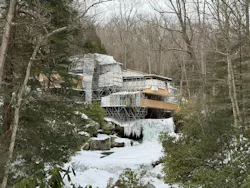
A $7.5 million preservation campaign tackles the construction mistakes baked into an architectural masterpiece
Fallingwater, Frank Lloyd Wright's iconic residence built directly over a Pennsylvania waterfall, has battled moisture intrusion, concrete cracking, and material deterioration since its construction between 1934 and 1939—problems rooted in the original design and construction. The Western Pennsylvania Conservancy recently completed its most comprehensive conservation effort in 25 years to keep the UNESCO World Heritage site open and watertight.
- Details ignored, details revisited. The absence of through-wall flashing, the use of rounded river pebbles in the concrete mix, and glass panels mortared directly into stone walls all created chronic failure points that preservationists have spent decades correcting.
- Water always finds a way. Testing proved that water entered at the top of the main chimney mass and traveled two full stories down into a bedroom. Nearly 12 tons of custom fill material were injected into hollow stone walls to stop moisture migration and stabilize the structure.
- Modern materials, original intent. The team replaced failed roofing membranes, repointed masonry, reconstructed deteriorated concrete, and recoated steel window frames, updating technologies while preserving Wright's original design intent.
- Laser precision for historic work. More than 400 3D laser scans of the exterior and interior were produced to document existing conditions, replacing outdated CAD drawings and photo montages from the 1990s.
Bottom Line for Pro Remodelers
Fallingwater is a cautionary tale dressed up as a masterpiece. Even the most celebrated design in American architecture couldn't outrun bad flashing details, incompatible materials, and concrete placed without regard for long-term performance. Physics doesn't grade on a curve. As engineer and ASHRAE fellow, Dr. Joe Lstiburek puts it:
"Don't leave your art out in the rain."
For remodelers working on high-end or historically significant projects, this story is a reminder that beauty and durability aren't opposites; however, beauty without durability always loses.
Go to THE SOURCE: Architectural Products — arch-products.com